
... if high oil prices persist or stock prices correct sharply.

The pre-Budget document on health of the economy stated that telecom, power, coal, ports, civil aviation and roads have shown signs of recovery in 2009-10.

Equity benchmarks climbed in early trade on Wednesday amid an overall positive trend in the global markets and ahead of the presentation of Union Budget 2023-24. The 30-share BSE benchmark Sensex jumped 516.97 points to 60,066.87. The broader NSE Nifty climbed 153.15 points to 17,815.30.

In the current fiscal so far, retail inflation stabilised around 5 per cent, while wholesale price-based inflation averaged around 2.9 per cent during April-December.

Referring to the impact of political turmoil in West Asia, he said the crisis would not hurt the economy unless the crude oil prices rise to 'abnormally' high levels.

The Indian startup ecosystem, which defied odds during a pandemic-hit year to create record 12 unicorns, has the potential to be the engine of growth in the medium to long run, according to the Economic Survey 2020-21. The survey noted that startups are the platform for entrepreneurs who have the ability to think out of the box and innovate to conceive products that can create a niche for themselves in a dynamically changing world.

The move is likely to encourage service providers to take their broadband services to rural India. To further increase connectivity, it recommended allowing open access to local loop for broadband provision and designate rural fibre-optic network as a 'public carrier' for provision of telecom connectivity in the rural areas.

With the dissolution of former chief statistician Pronab Sen-led Standing Committee on Statistics (SCoS) by the Ministry of Statistics and Programme Implementation (MoSPI), the National Statistical Commission (NSC) has regained prominence as the primary statistical body to address issues regarding results, methodology and questionnaire, among others. A MoSPI official in an email informed the 16-member SCoS about the decision to dissolve it, citing that its work was "overlapping" with that of the Steering Committee for National Sample Surveys (NSS), which was set up in June this year.
The government on Thursday said that any slowdown in the excess capital flows from the last year's high levels could affect the stock market in short-term, even as it would make the monetary management easier.

However, financial flows to the economy remained constrained because of decline in the amount of equity finance raised from the capital markets and stress in the NBFC sector, Finance Minister Nirmala Sitharaman pointed out.

The substantially increased economic dualism may exert lasting negative influences which could include a reduced potential for economic growth; the persistence of a very weak employment and poverty situation; rising social and political discord; and heightened vulnerability to geopolitical challenges, cautions Shankar Acharya, former chief economic adviser to the Government of India.
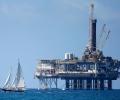
In a significant move, state-run oil producer Oil India Limited (OIL) has finished drilling its first well in the Andaman sea while Oil and Natural Gas Corporation (ONGC) has just started drilling operations in the area, said officials.

The government should frame new policies to assure growth.
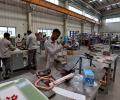
India's manufacturing sector growth fell to a joint 11-month low of 56.5 in November, restricted by competitive conditions and inflationary pressures amid a softer increase in factory orders, a monthly survey said on Monday. The seasonally adjusted HSBC India Manufacturing Purchasing Managers' Index (PMI) fell from 57.5 in October to 56.5 in November, signalling a softer improvement in the health of the sector. However, the pace of growth remained above its long-run average.
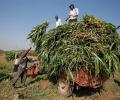
The World Bank on Tuesday raised the growth forecast for the Indian economy to 7 per cent for the current fiscal year on the back of recovery in agri sector and rural demand. World Bank had in June projected India to grow at 6.6 per cent for FY24. According to the World Bank Report released on Tuesday, India's growth continues to be strong despite a challenging global environment.
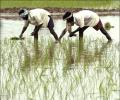
The farm sector achieved 3.6 per cent growth during the 11th Five year Plan (2007-12), falling short of the 4 per cent growth target, although it was much higher than growth of 2.5 and 2.4 per cent during 9th and 10th Plans, it added.

'Consider 40% to 50% in equities, 10% in gold as a hedge, and the remaining 30% to 40% split between multi-asset funds and hybrid funds.'

If as critics point out, the environmental impact assessment study was commissioned only after the auction process got underway with not all the stakeholders getting to know of it, then the government has already compromised the trust it could have enjoyed with Kerala's public including its coastal communities, points out Shyam G Menon.

From the Sensex pack, Reliance Industries, Bajaj Finserv, HDFC Bank, Adani Ports, Maruti Suzuki India, Axis Bank, Hindustan Unilever, Sun Pharmaceuticals and Asian Paints were among the laggards. Reliance Industries fell the most by 2.38 per cent to close at Rs 1,171.10 apiece.
Lauding the farm sector for demonstrating resilience during the pandemic, the Economic Survey on Friday suggested the government to see farm sector as a "modern business enterprise" for which "urgent reforms" are required to enable sustainable and consistent growth. India's agricultural sector has shown its resilience amid the adversities of COVID-19 induced lockdowns, the Survey noted. The agriculture and allied activities were the sole bright spot amid the slide in GDP performance of other sectors, clocking a growth rate of 3.4 per cent at constant prices during 2020-21, it added. According to the Survey, the farm sector has got "renewed thrust" due to various measures on credit, market reforms and food processing under the Aatmanirbhar Bharat announcements.

The government has to specify what it intends to do with caste census data. It will be closely tracked if the government would simultaneously move towards removing the present 50% bar on reservations using means which are permitted in law. If this is not done, the entire exercise will become meaningless and could boomerang on the BJP, observes Nilanjan Mukhopadhyay.

Successive plans have allocated less resources to the Railways.

The Economic Survey seems convinced that 2019-2020 saw the bottom of the economic cycle, points out Abheek Barua, chief economist, HDFC Bank.

The plea filed by Nalanda resident Akhilesh Kumar submitted that in terms of the constitutional mandate, only the Union government is empowered to conduct a census.

The Bihar government has formed a state-level task force to monitor actions taken by authorities to prevent and eradicate child marriages in the state. Bihar has the second-highest rate of child marriage in India, with 40.8% of women getting married before turning 18. The government is implementing a multipronged strategy to combat child marriage, including stricter enforcement of the law, empowering girls through education, and raising awareness.

Union Finance Minister Nirmala Sitharaman on Tuesday commended Indian financial sector regulators for doing a "world-class job" and bringing greater transparency into the system. Underlining that she is not against questioning or critiquing regulators, Sitharaman said there is a need to be "extremely conscious" about contributions made by them as well. Speaking at the Financial Express Best Banks Awards, the finance minister said, "I strongly recommend that facts are taken on board before we discuss anything to do with the regulators, strictly speaking."

The gross tax revenues have touched 65 per cent of the Budget estimates at Rs 17.81 lakh crore during the first eight months of the current fiscal till November, propelled by corporate and personal income tax mop-up, according to the Economic Survey 2022-23 presented in Parliament on Tuesday. The survey, authored by Chief Economic Advisor V Anantha Nageswaran, said the 'substantial reforms' in India's taxation ecosystem post-2014 and policy reforms have removed the distortionary incentives from the economy. Reforms like GST, reduction in corporate taxes, exemption of sovereign wealth funds and pension funds from taxes, and removing Dividend Distribution tax have reduced the tax burden on individuals and businesses.

Some of his directives had the Supreme Court judges disclose their assets whereas the row over the discovery of cash from a sitting judge's official residence paved way for inquiry.
There are few concerns in India's growth story.

India's economic growth will be above 6 per cent in the current fiscal as the country has managed to strengthen its macroeconomic stability and performance even in a period of large global shocks, RBI Monetary Policy Committee (MPC) Member Ashima Goyal said on Monday. Goyal further said that a global slowdown reducing India's export growth, geopolitics fueling oil and food prices, and erratic weather are some of the continuing risks that the country faces. "India has managed to strengthen its macroeconomic stability and performance even in a period of large global shocks.

Finance Minister Nirmala Sitharaman will present the Union Budget on Tuesday as the Monsoon Session of Parliament gets underway next week with the united opposition set to corner the National Democratic Alliance government on issues ranging from the NEET paper leak case and railway safety.

'Unsurprisingly, Trump shared Modi's podcast with Fridman on his Truth account.' 'The intentions of Trump, a transactional president, are never easy to tell.' 'We will know in the next fortnight if and when he unfolds reciprocal tariffs on Indian goods, whether Modi's flattering words made any significant difference to Trump's compass,' notes Ambassador M K Bhadrakumar.

The country's exports are expected to contract by 5.8 per cent and imports by 11.3 per cent during the second half of the current financial year, though implementation of several measures by the government would help support exports going forward, according to the Economic Survey 2021. With gradual recovery of economic activities, the survey said that imports and exports have picked up. During the first half of 2020-21 (April-September), exports dipped by 21.31 per cent to $125.25 billion while imports declined by 40 per cent to $148.69 billion.

The deficit increased to $ 57.2 billion or 2.1 per cent of gross domestic product (GDP) in 2018-19 as against 1.8 per cent in the previous year.

It also advocated adoption of technology platforms and innovative models.

The bench noted even the high court has said in its judgement that 80 per cent of the work related to the survey has been completed.

Prospects of a bumper kharif harvest are expected to lower food inflation in the coming months, making the country's inflation outlook benign, the Union Ministry of Finance (FinMin) said in its monthly economic report for October released on Monday.

Finance Minister Nirmala Sitharaman is likely to strike a fine balance between being fiscally prudent and growth supportive when she presents her fourth straight budget on Tuesday, which is expected to have plans to boost spending to revive investment and create jobs. The Budget for the fiscal year starting April 1, 2022 is likely to raise spending on infrastructure to set the economy on a firmer footing. The stage for the Budget presentation was set by the Economic Survey stating that the government has the fiscal space to do more to support the economy that is forecast to grow at a healthy 8-8.5 per cent growth in the 2022-23 fiscal.

A united opposition is set to corner the NDA government on issues ranging from the NEET paper leak case to railway safety.

Stressing that economic growth will only move upwards, the Reserve Bank of India Governor Shaktikanta Das on Friday pegged the GDP growth rate for the next financial year at 10.5 per cent, though a tad lower than the government's projection of 11 per cent. The projection is in line with the estimates in the Union Budget 2021-22 presented in Parliament earlier this week. The Economic Survey, tabled by the government in Parliament recently, has projected that the economy will grow at 11 per cent, up from an estimated historic decline of 7.7 per cent in 2020-21, on account of the COVID-19 pandemic.
